
While some data loss is inevitable, how you respond to a data breach or business disruption can have a significant impact on your bottom line, or even your survival. Cloud disaster recovery has become essential as security threats increase from malicious code, hackers, and natural disasters. Data loss is no longer a matter of if, but when.
Why Businesses Are Turning to Cloud Disaster Recovery
Although most companies and their IT departments are aware of the risks, few make an effort to implement disaster recovery until it’s too late. With cyberattacks and internal security failures becoming more commonplace, companies are increasingly turning to disaster recovery in the cloud.
Data protection and recovery capabilities weigh heavily in cloud planning decisions, particularly in regulated environments. While it’s important to safeguard systems and infrastructure against unauthorized access or malicious threats, at the same time, it’s essential to balance these risks with the unique goals and long term objectives of your business.
The fundamental goal of disaster recovery is to reduce the impact of data loss or security breach on business performance. Cloud-based disaster recovery offers an effective way to do just that. In the event of a data breach or system failure, your team can shift critical workloads to a recovery site and resume operations quickly. Once you restore your data, you can transition back from the cloud and return applications to their original state. This approach reduces downtime and minimizes disruption.
The Performance Benefits of Cloud Disaster Recovery
Compared to traditional methods, cloud computing disaster recovery is relatively straightforward to configure and manage. It can eliminate many hours of time moving backup data from tape drives or on-premises servers to recover following a disaster. Automated cloud processes help ensure rapid and trouble-free data recovery.
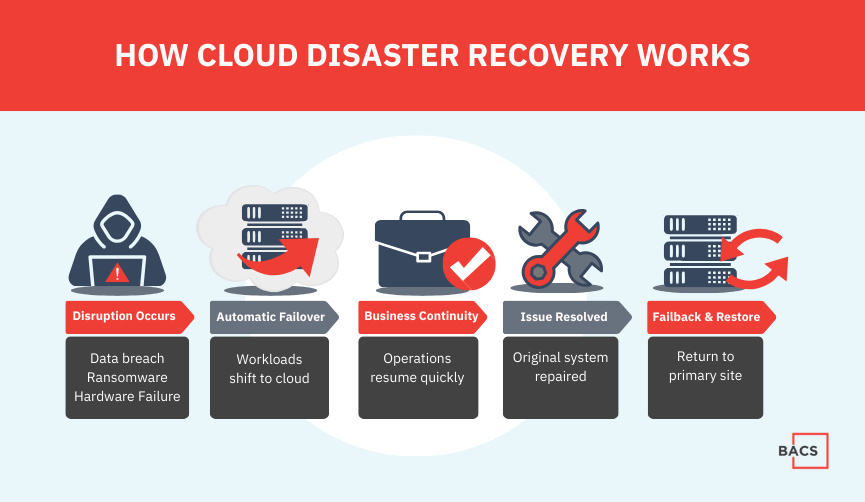
With the right configuration and a reliable provider, cloud-based disaster recovery can deliver a number of important benefits:
Fast recovery
Cloud virtualization changes how disaster recovery works. Instead of rebuilding physical servers, your team can duplicate virtual servers and move them to a separate data center within minutes. This approach significantly reduces recovery time compared to traditional hardware-based methods. For many businesses, cloud disaster recovery provides the most practical way to maintain business continuity and long-term stability.
Cost Savings
One of the biggest advantages of cloud-based data recovery over standard techniques is its lower cost. Traditional data backup requires deploying physical servers at a separate location, which can be expensive. Cloud configurations, however, enable you to outsource the amount of hardware and software you need while paying only for the resources you use. Because you avoid upfront capital costs, the pay-as-you-need model keeps your total cost of ownership lower. You can also eliminate the need to store volumes of backup tapes that could be cumbersome and time consuming to access during an emergency. Smaller businesses can select a service plan that suits their budget. Managing the data doesn’t require hiring extra IT staff. Your service provider manages the technical details and tasks, allowing your team to focus on other priorities.
Scalability
Relying on the cloud for your disaster recovery provides substantial operational flexibility advantages, allowing you to easily scale your capacity as workloads shift and business needs change. Instead of locking into fixed storage limits, you can scale capacity as needed. This flexibility ensures your recovery processes continue to meet business requirements. Cloud backup provides a high level of scalability, with the ability to easily add whatever capacity you need. As your business grows, your backup systems can scale along with them. You simply adjust your service plan from your provider and request additional resources as your needs shift.
Security
Despite the security concerns of cloud infrastructure, implementing a cloud-based disaster recovery plan is quite safe and reliable with the right service provider. Most providers offer comparable, if not better security protection than many on-premises environments. Still, in the area of disaster recovery and business continuity, there is little room for error. Be sure to perform your due diligence and ask the difficult questions when evaluating the provider who will be backing up your critical business data.
Redundant Capabilities
A cloud environment can provide a level of redundancy that would be cost prohibitive to create with on-premises infrastructure. Providers create redundancy by using additional hardware and data center infrastructure equipped with multiple fail-safe measures. By capitalizing on specialized services and economies of scale, cloud solutions can provide much simpler and cost efficient backup capabilities than on-premises systems. Redundancy ensures you can recover critical information at any time, regardless of the type of event or how the data was lost. This redundancy extends to other cloud components from power to connectivity to hosts and storage.
Reliability
Cloud-based disaster recovery provides a reliable failback and business continuity solution. When a disruption occurs, systems automatically shift workloads to a secondary location and resume operations. The failover process maintains data availability. After you resolve issues at the original site, your team can transfer applications and workloads back. This approach restores operations faster than traditional recovery methods that rely on physical servers.
Traditional recovery techniques take longer because they depend on hardware deployed at separate locations. You may also migrate data in phases, depending on volume. Although cloud systems automate backup and failover processes, you should still test them regularly. Routine testing ensures critical production data remains protected and uncompromised.
Building an Effective Cloud Disaster Recovery Strategy
Most businesses benefit from the efficiency of cloud infrastructure and its ability to scale resources, optimize assets, and improve backup and recovery performance. As market demands shift and organizations seek greater agility, cloud-based recovery continues to expand across industries.
There is no universal blueprint for the perfect backup and recovery configuration. However, a strong starting point is implementing failover measures for all connected devices. Outdated firmware on connected devices often creates entry points for cyberattacks. You should ensure your devices and networks are properly hardened and equipped to defend against evolving threats.
Every effective disaster recovery plan includes a guiding document that outlines specific procedures to follow in the event of a disruption. This action plan should account for multiple scenarios and define clear steps to reduce impact. A well-defined strategy enables your team to restore critical systems and processes quickly and efficiently.
After you identify and prioritize your data and applications and define recovery time objectives, you can build a strong foundation for a cloud-based disaster recovery solution.
Depending on your resources and requirements, closing the gap between business needs and disaster recovery capabilities may take time. Regardless of the timeline, developing a well-structured and tested plan delivers long-term value that far exceeds the initial investment. Contact us today to support you in creating this plan.