
Social engineering red flags are getting harder to spot. These attacks are no longer limited to obvious phishing emails. Today, these threats appear across email, text messages, phone calls, QR codes, and even AI-generated voice and video. Many are designed to look routine, urgent, or familiar. The goal is almost always the same: get someone to act quickly without verifying the request.
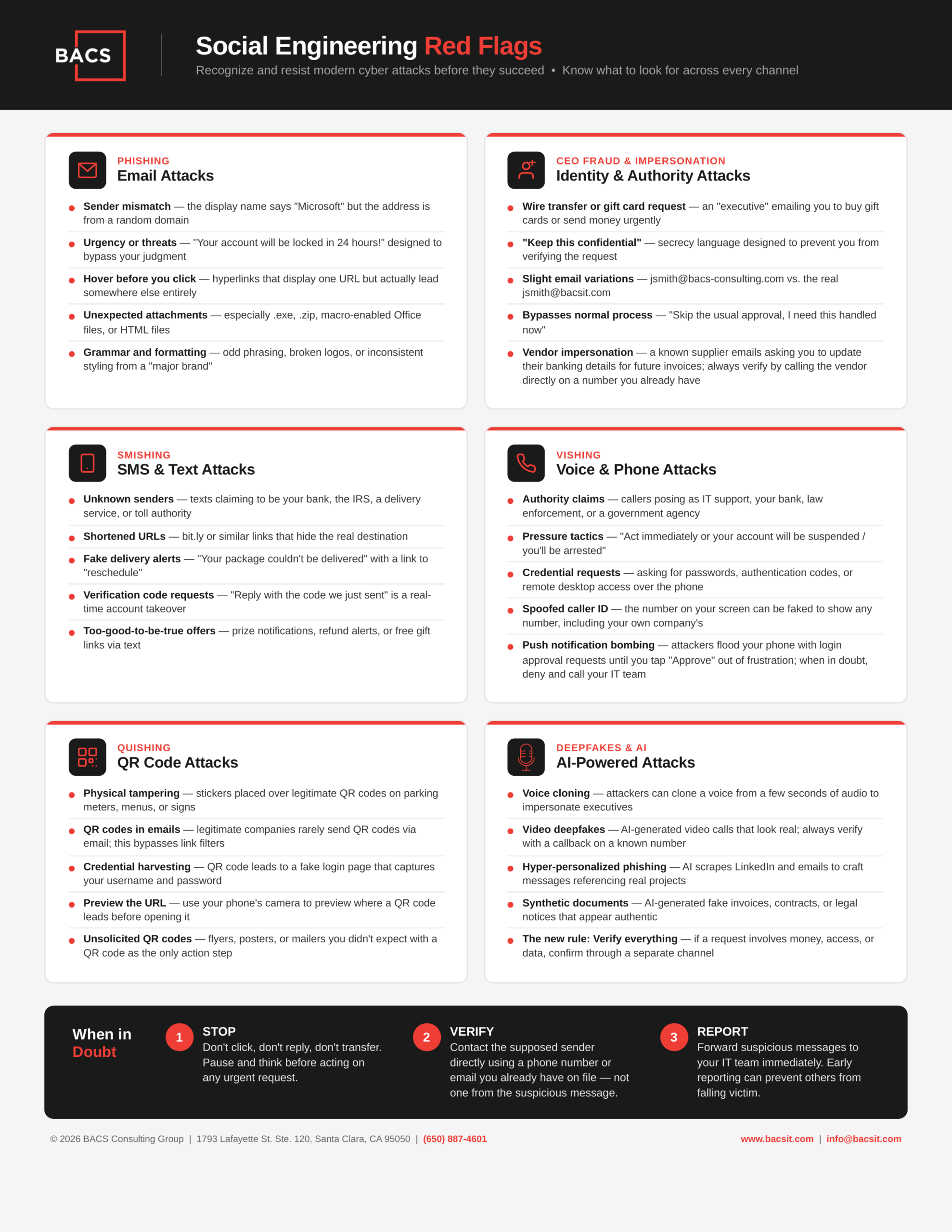
That is why we created the Social Engineering Red Flags Guide you see above. It is a simple, visual reminder of the most common warning signs that appear across modern cyber attacks. You can also download and print the full guide here.
Common Social Engineering Red Flags Across Channels
While delivery methods continue to evolve, most social engineering attacks rely on a consistent set of tactics. Recognizing these social engineering red flags can help prevent incidents before they happen.
- Urgency or pressure such as “This must be handled now”
- Impersonation of authority including executives, IT, vendors, or banks
- Requests that bypass normal processes or approvals
- Unexpected links, attachments, QR codes, or phone calls
- Subtle changes in sender names, phone numbers, or domains
These red flags appear across email and text messages, but phone-based attacks are increasing as well. Vishing attacks involve callers posing as IT support, financial institutions, or company leadership to pressure individuals into sharing sensitive information.
Attackers are also using AI to personalize messages, making them more convincing and harder to detect. This shift is one reason traditional awareness training is no longer enough on its own.
The Most Important Habit: Pause and Verify
Across all attack types, one habit consistently reduces risk:
If something feels off, pause and verify through a separate channel.
This might include:
- Calling the person using a known phone number
- Checking directly with IT or finance before responding
- Verifying requests verbally instead of replying to the original message
Attackers rely on speed and distraction. Slowing down the interaction helps break the attack before it succeeds.
The human element remains one of the most common entry points for cyber threats. Building awareness around social engineering red flags is critical to reducing that risk.
Make Red Flags Part of Daily Awareness
Security tools play an important role, but awareness is often what stops social engineering attacks before they reach your systems. Sharing quick reference materials, reinforcing verification habits, and encouraging employees to ask questions without hesitation can significantly reduce risk. The Social Engineering Red Flags guide is designed to support that effort by giving teams something simple and actionable they can use every day.
If you would like help reviewing real-world examples or strengthening awareness within your organization, BACS Consulting Group is always here to support you.